
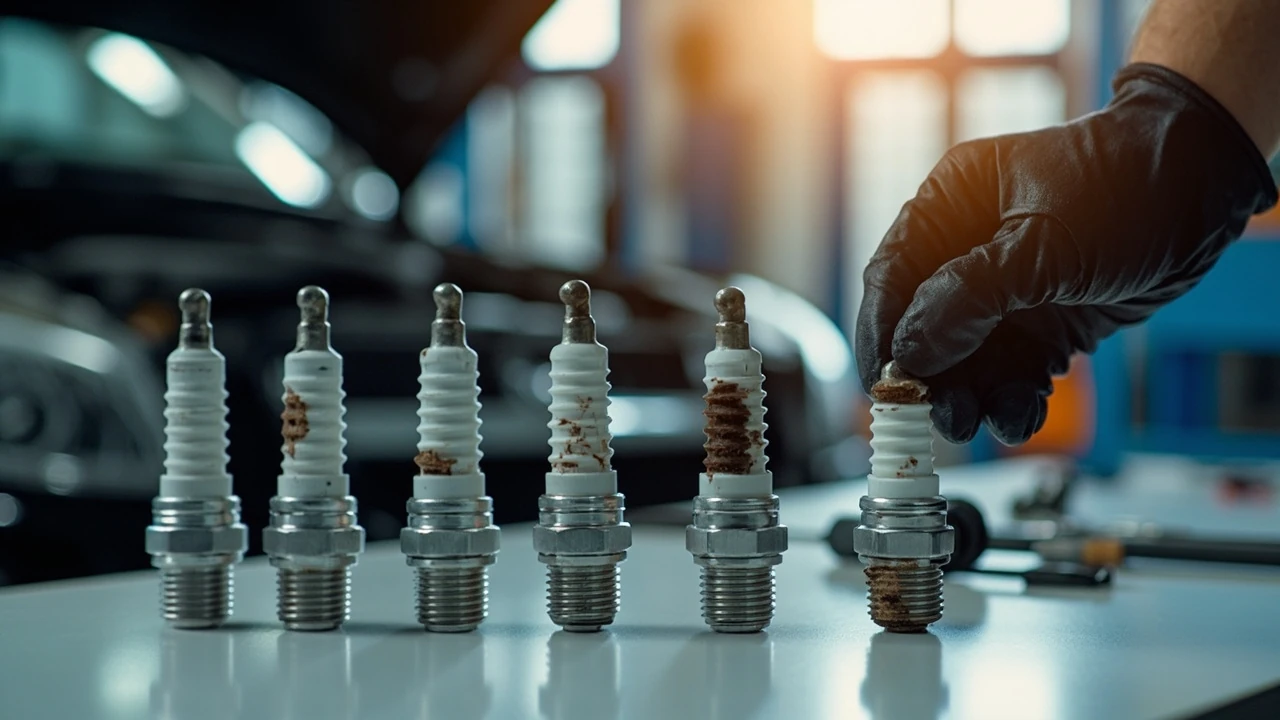
How to recognize bad spark plugs and what to check next
A weak, fouled, cracked, or incorrectly installed spark plug can make an engine hesitate, stumble, lose power, or refuse to start. The warning signs are easy to confuse with fuel, battery, injector, or ignition-coil problems, so replacing plugs based on one symptom alone can waste time and money. A better approach is to connect what the engine is doing with what you can physically observe on the plug, then test the rest of the ignition system before deciding on parts.
Bad spark plugs do more than fail to create a spark. Their condition can also reveal how the engine has been operating. A plug with heavy carbon may point to an overly rich mixture, while an oil-soaked plug can point toward valve-guide oil or a failed gasket. A plug that looks normal can still be weak or incorrectly gapped, and a plug that fires by itself can still be the wrong type for the engine.
This guide focuses on one practical question: how can a driver identify the most likely problem, perform sensible checks, and decide whether the next step is a plug replacement or a more involved diagnosis? It covers common symptoms, visual inspection, gap checks, installation mistakes, and the limits of what a plug swap can fix.
Understanding the component helps with diagnosis. A For additional context, spark plug and its basic construction explain how the ignition system transfers high voltage to the combustion chamber, why the ceramic insulator matters, and why the electrode gap and ground connection are important.
What bad spark plugs do to engine performance
A spark plug has a narrow job, but the engine depends on it happening consistently and at the correct time. The ignition system sends voltage through the plug, and the small gap between the central and ground electrodes produces the spark that starts combustion. If that event is weak, delayed, intermittent, or missing, the engine may still run, but it will not run efficiently or smoothly.
Common symptoms of worn or damaged plugs include:
- A crank that turns slowly or stalls before the engine catches
- A weak, uneven, or intermittent starter sound
- Engine misfires, hesitation, or a rough idle
- Loss of power, especially during acceleration
- Reduced fuel efficiency
- A lit check-engine light, though the exact code depends on the vehicle
- An exhaust that sounds noticeably different from normal
- Black, oily, or unusually worn plug deposits
These signs are not exclusive to the plugs. A fouled plug may be the result of another fault, such as a leaking injector, a restricted air filter, a failed fuel pressure regulator, or an engine that has spent too long rich. The plug often provides evidence of the problem rather than the final diagnosis.
The severity depends on how the engine is being used. A single cylinder that occasionally fails to ignite may create a mild shake. Multiple cylinders with poor ignition can cause a stumble, a flashing check-engine light, or a complete no-start condition. Driving with repeated misfires can damage catalytic converters or other exhaust components because unburned fuel continues entering the exhaust system.
Do not ignore a flashing check-engine light. In many vehicles, a steady light indicates a stored fault, while a flashing light usually signals an active severe misfire. The vehicle should be shut down and diagnosed rather than driven longer, especially if the engine is shaking badly.
Inspect the plug before buying a replacement
When a plug is accessible without major disassembly, remove it carefully and compare it with the others. A single damaged plug can point to a localized problem, such as one failed coil, injector, or compression issue. If every removed plug looks similar, the cause may involve the fuel system, engine management system, ignition timing, or a maintenance issue affecting all cylinders.
Start by identifying the cylinder and keeping the removed parts in order. Compare the electrode, center electrode, insulator, and threads with the other plugs. Do not scrape deposits from a plug with a hard tool, and do not use a wire brush to “clean” a plug whose condition needs to be understood. Light residue can be inspected; aggressive cleaning can hide evidence and damage the electrode.
| What you see | Likely meaning | What to check next |
|---|---|---|
| Dry, black carbon | The plug is not self-cleaning or the engine has been running rich | Fuel injectors, air filter, fuel pressure, spark plug heat range, and engine operation |
| Wet fuel or fuel odor | Unburned fuel reached the cylinder | Ignition, injectors, cold-start enrichment, and whether the engine starts and then dies |
| Oil coating on the insulator or electrode | Oil may be entering the combustion chamber | Valve-cover gasket, piston-ring sealing, and valve-guide condition |
| Light tan or brown deposits | Normal deposits may be present | Oil consumption, fuel type, and the appearance of the remaining plugs |
| White or pale deposits | Possible coolant contamination or an unusual fuel additive | Head-gasket condition, coolant level, oil contamination, and combustion symptoms |
| Rounded, recessed, or uneven electrode | Long-term wear, erosion, or excessive gap | Plug type, service interval, engine condition, and measured gap |
| Cracked ceramic | The plug can leak or break under pressure | Replace the plug and inspect the installation area for damage |
Oil on a spark plug does not automatically mean the engine is burning excessive oil. Small amounts of oil can collect around the plug guide and reach the electrode, especially during shutdown. A plug with substantial oil on the ceramic, heavy oil consumption, blue exhaust smoke, or oil in the combustion chamber is more concerning.
Carbon also has context. Cold weather, repeated short trips, a restrictive intake, or a rich running condition can leave deposits that do not clear under normal load. That means the replacement plug should match the manufacturer’s specification, and the underlying operating condition may still need attention.
Check the spark, gap, and installation details
Visual inspection can identify physical damage, deposits, and an incorrect heat range, but it cannot prove that every plug produces a strong spark under load. Several related checks help narrow the problem.
Measure the electrode gap
Use the gap gauge specified for the plug type and compare the measurement with the vehicle service specification. A gap that is too wide can make the ignition system work harder and may produce a weaker or less consistent spark. A gap that is too narrow can contribute to hard starting, rough running, or a plug that will not fire. The correct value is not universal, so do not assume that every modern plug should have the same gap.
Perform a spark test with care
A basic spark test can show whether voltage reaches the plug. A healthy test produces a consistent, bright blue spark across the gap under the conditions created by the tester. A weak, intermittent, or orange-colored discharge may indicate a problem, but the tester result should be interpreted with the engine’s condition. Oil in the plug well can affect the test, and a plug that is not firing under load does not always fail in a simple bench test.
Do not hold a spark tester electrode near the threaded shell, and do not run a test in a poorly ventilated space. The high voltage used by ignition systems is dangerous. If you are not comfortable with the procedure or do not have the correct tester and gauge, have a technician perform the inspection.
Confirm the correct plug specification
A For additional context, plug that physically fits is not necessarily the correct plug for the engine. Compare the part number, thread size, reach, seat type, electrode design, and heat range with the vehicle specification. Many modern engines use a specific iridium or platinum electrode design and a calibrated gap. Installing a visually similar plug with the wrong gap or heat range can create hard starting, misfires, or an incorrect ignition system strategy.
- Match the exact manufacturer part number when possible.
- Check whether the engine specifies a resistor, non-resistor, or specific electrode material.
- Use a torque wrench for the final tightening if the manufacturer provides a torque value.
- Install a new plug seal when the design calls for one.
- Seat the plug correctly without cross-threading it.
For general maintenance and troubleshooting context, our guide to starting a car with a bad starter explains how to distinguish a no-crank condition from an engine that cranks but does not start.
Common causes of bad spark plugs
Replacement is often appropriate when a plug has reached the end of its service life, but plugging a worn plug does not correct every symptom that caused the owner to inspect it. Understanding the likely cause prevents repeat failures.
| Cause | How it affects the plug or engine | Typical corrective direction |
|---|---|---|
| Normal electrode wear | The gap changes and spark consistency declines over time | Replace with the specified plug and set the gap if required |
| Rich fuel mixture | Black carbon accumulates and the engine may run rough | Diagnose injectors, fuel pressure, air intake, and engine controls |
| Failed ignition coil or plug wire | One cylinder may not receive a reliable high-voltage signal | Test the coil, connector, and wiring before condemning the plug |
| Incorrect spark plug | The heat range, resistance, reach, or gap may not match the engine | Install the exact specified part |
| Damaged plug or poor sealing | Combustion gases can leak around the plug or the ceramic can fracture | Replace the plug and correct the installation torque |
| Oil or coolant contamination | Deposits interfere with the electrode or reveal a sealing problem | Diagnose the source of contamination |
| Ignition timing or knock issue | Combustion occurs under the wrong conditions and deposits may form | Check timing, knock control, fuel quality, and engine condition |
One of the most common mistakes is treating every misfire as proof that all plugs are bad. If four out-of-six plugs look normal and one is oily or damaged, replacing the set without investigating may hide an injector, compression, or oil-control issue. Start with the condition of the removed parts, but remember that appearance alone cannot rule out an electrical failure.
Another mistake is changing plugs before checking the basic service items. A dirty air filter, wrong spark plug gap, loose connector, damaged plug wire, or poor ground can produce symptoms that look identical. Diagnosis is more reliable when the simple causes are checked before expensive parts are ordered.
Bad spark plug symptoms and the clues behind them
The symptom pattern helps determine where to begin. A plug problem can resemble many other faults, so use the clues rather than relying on a single label.
Engine cranks but does not start
An engine that cranks steadily but never fires may have no spark, inadequate fuel delivery, or a compression problem. Plug-related causes include a severely fouled plug, an incorrect gap, a failed coil, or a damaged connection. Open the diagnostic trouble codes before removing components, and note whether the engine catches intermittently. A plug that fails only while the engine is warm can point to an ignition component that behaves differently under operating conditions.
Engine starts, runs for a moment, and dies
This pattern may involve fuel delivery, a sensor providing incorrect information, or ignition that fades after the engine warms. Bad spark plugs are more likely when the fuel smell is strong, the plugs are wet, or one cylinder consistently has a different appearance.
Rough idle and hesitation
Misfires make an engine shake and can cause a stumble during acceleration. Inspect the plug appearance and compare it across cylinders. Also check for intake leaks, injector issues, and ignition faults. If the engine runs rough but the plugs look normal, the plugs may not be the primary failure.
Loss of power
A plug that no longer produces a reliable spark can reduce power, especially when the engine requires more output. Weak plugs are not the only possible explanation. Low fuel pressure, restricted air flow, worn engine components, and transmission-related power loss can create similar results.
Check-engine light and misfire codes
Diagnostic codes can narrow the investigation, but they should be interpreted with live data and a physical inspection. A misfire code identifies an affected cylinder; it does not, by itself, prove that the spark plug failed. Air-fuel ratio data, injector information, ignition timing, and the condition of the plug all help complete the picture.
If the engine has an unusual smell, diagnose it carefully rather than assuming it is a plug issue. Our article about why a car can smell like burning rubber covers several possible sources so drivers can avoid replacing parts based only on odor.
How to replace spark plugs without creating new problems
Replacing spark plugs is a straightforward job on some engines and a significant operation on others. The difficulty depends on the engine layout, plug location, fasteners, and access to the intake or exhaust components. Follow the vehicle service manual for access instructions and torque specifications.
Before removing the old plugs, work in cylinder order and label each position. Let the engine cool, disconnect the battery if the manufacturer’s procedure requires it, and remove the ignition connection carefully. Avoid pulling on the plug wire or terminal. If the engine uses coil-on-plug ignition, inspect the coil and boot for cracking or contamination.
- Confirm the replacement part. Match the full manufacturer specification rather than relying on the shape of the old plug.
- Remove the old plug cleanly. Use the correct socket and extension. If the plug is seized, apply penetrating oil and allow it to soak before applying controlled force.
- Inspect the removed plug. Note deposits, oil, cracks, electrode wear, and differences between cylinders.
- Inspect the plug well. Look for oil, coolant, damage, or debris around the seat and threads.
- Check the new plug. Keep it clean and handle it by the terminal area rather than the ceramic.
- Set the gap if required. Adjust only according to the manufacturer specification and use the correct gauge.
- Install carefully. Start the thread by hand to prevent cross-threading, then tighten to the specified torque.
- Reconnect and verify. Seat each coil or wire fully, restore battery connections if applicable, and confirm that the engine runs smoothly.
Do not use excessive force on a ceramic plug. A plug that cracks during installation can allow combustion gases to leak into the plug well and may create a new misfire. If the old plug is seized and the socket twists in the cylinder head, stop and use the correct removal procedure rather than increasing leverage.
Replacing one plug at a time on a multi-cylinder engine may be possible on some models, but replacing the full set is often more practical and can prevent uneven wear. Follow the specified replacement interval rather than mixing new plugs with severely worn ones unless the manufacturer explicitly supports that approach.
After replacement: confirm the repair and watch for warning signs
A successful replacement should be confirmed by behavior, not just by turning the key. The engine should start consistently, idle evenly, accelerate without hesitation, and remain free of new trouble codes. Clear diagnostic codes before the repair if the vehicle allows it, then compare them with the previous stored information.
Drive the vehicle long enough to cover normal operating temperatures. Pay attention to cold starts, idle quality, acceleration, and any recurrence of the original symptom. If the engine still runs rough after a correct plug replacement, the original plug was probably a symptom of another problem. Continue diagnosing rather than repeatedly replacing plugs.
| After-installation check | What to notice | Next step if the problem remains |
|---|---|---|
| Start behavior | Cranking speed, first fire, and whether the engine catches consistently | Check stored codes, fuel delivery, ignition, and compression |
| Idle | Smooth running without shaking or rapid RPM fluctuations | Identify the affected cylinder and compare injector, coil, and plug data |
| Acceleration | No hesitation, stumble, or loss of power | Check air/fuel restrictions, ignition timing, and sensor data |
| Exhaust | No new fuel odor or unusual smoke | Investigate rich running, leaks, or oil consumption |
| Trouble codes | No return of the original code or new active misfire code | Read the code and perform targeted tests |
Use the owner’s manual and service information for the exact inspection interval. Replacement intervals vary with the plug material, engine design, service history, and operating conditions. A plug that has survived one interval may still wear quickly if the engine has a fault that leaves it fouled.
Also review the other basic items that affect ignition performance. The air filter should be properly installed, the intake should be free of unintended leaks, the battery should be in sound condition, and electrical connections should be secure. These checks do not all diagnose plugs directly, but they help rule out simple causes of a rough-running engine.
Frequently asked questions
Can bad spark plugs make a car not start?
Yes. A fouled, damaged, incorrectly gapped, or failed plug may prevent ignition in one or more cylinders. A no-start condition can also result from fuel, compression, battery, sensor, coil, or wiring failures, so the plugs should be evaluated along with the rest of the diagnosis.
How do I know if my spark plugs are bad?
Look for a weak or intermittent spark, compare the electrode gap with the specification, and inspect each removed plug for cracks, oil, fuel, carbon, and unusual wear. One plug that differs from the others deserves special attention because it may indicate a cylinder-specific problem.
Can I clean spark plugs instead of replacing them?
Cleaning may be acceptable for some light carbon deposits when the plug type, engine condition, and manufacturer guidance allow it. However, cleaning does not correct an incorrect gap, physical damage, wrong heat range, or the underlying reason the plug became dirty. Replacement is usually the more reliable choice when wear or damage is present.
What does a bad spark plug look like?
The appearance depends on the cause. A bad plug may have heavy black carbon, fuel residue, oil on the ceramic, white deposits, a rounded or eroded electrode, a recessed center electrode, or a cracked insulator. A plug that looks normal can still fail electrically, so appearance is only one part of the diagnosis.
Does a check-engine light mean the spark plugs are bad?
Not necessarily. A check-engine light can be set by many engine, emissions, fuel, or sensor faults. Read the stored code and perform supporting tests. A flashing light generally deserves immediate attention because it can indicate an active severe misfire that may damage other components if the vehicle is driven.
Should I replace all the spark plugs at once?
Replacing the full set is often the most consistent approach, especially if the engine has reached the specified service interval or the plugs show similar wear. Some engines are physically difficult to access, so a technician can advise whether staged replacement is practical and safe.
What happens if a spark plug is installed incorrectly?
An incorrect gap or heat range can cause hard starting, misfires, reduced performance, and faster plug wear. Cross-threading or under-torquing can damage the plug or the cylinder head. A plug that is overtightened may also be damaged, so use the specified tightening procedure rather than estimating by feel.
Can a bad spark plug trigger the check-engine light with a misfire code?
Yes, if the plug fails to ignite its cylinder reliably, the engine can report a misfire. However, the code identifies the symptom and cylinder, not the failed component. The plug, coil, wiring, injector, compression, and fuel or air problems must be checked before replacing parts.
How long should spark plugs last before replacement?
The service interval depends on the engine and plug type, and it should come from the vehicle manufacturer. Some plugs are designed to last for a stated number of miles or years, while others require replacement sooner when the engine has a fault. Check the maintenance schedule rather than relying on a universal interval.



Leave a Reply