
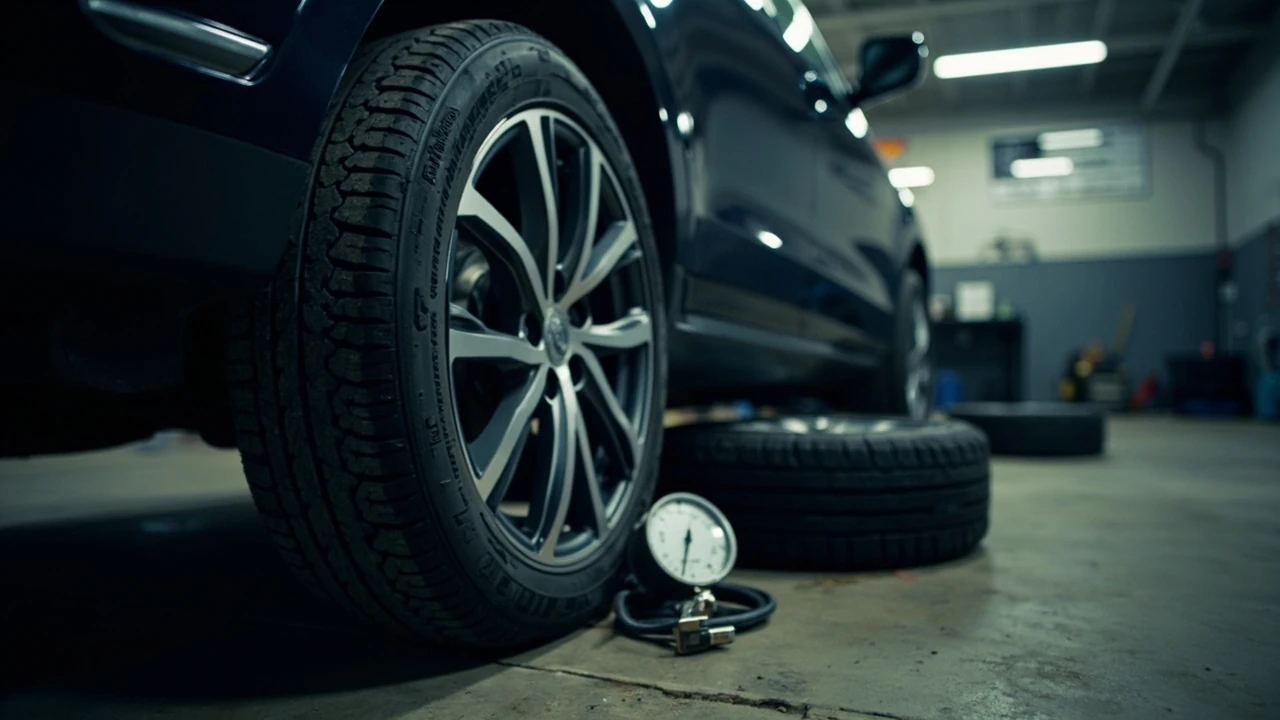
What 225/55R18 means for tire fitment
A tire marked 225/55R18 may look like a minor detail on a parts listing, but the code contains four pieces of information that determine whether the tire can be installed safely on a particular vehicle. The 225 identifies the nominal section width in millimeters, 55 is the aspect ratio, R confirms that the tire is a radial construction, and 18 is the wheel diameter in inches. The code does not, however, tell you the tire’s permitted load, speed, construction, or clearance on every vehicle.
That distinction matters because two tires carrying the same 225/55R18 size can have very different load indexes, speed ratings, traction designs, and treadwear expectations. They may also fit differently depending on the wheel width, suspension configuration, wheel offset, and the rest of the vehicle’s specifications. For shoppers, the size code is an excellent starting point, but it is not the final approval to buy.
Before comparing prices, tread patterns, or brands, a driver should confirm the tire size listed for the vehicle and understand what each part of the code means. This guide explains the dimensions, the checks that matter before purchase, and the questions to ask at a tire shop. It also shows why replacing a tire with a different size may require more than a quick change in the tire catalog.
How to read the 225/55R18 tire size code
The most useful way to understand a tire size is to separate the visible size code from the additional information printed elsewhere on the sidewall. The size code establishes the basic proportions, while the other markings identify capabilities and compliance information.
| Code element | What it means | What it does not establish |
|---|---|---|
| 225 | Nominal section width of 225 millimeters | The exact width at every part of the tire or whether it will clear the vehicle |
| 55 | Sidewall height is 55% of the nominal section width | The tire’s total exact height in millimeters |
| R | Radial tire construction | The tire’s load or speed capability |
| 18 | Nominal wheel diameter of 18 inches | The required width, offset, or bolt pattern |
Using the nominal dimensions, the sidewall height works out to approximately 123.75 millimeters because 225 millimeters multiplied by 0.55 equals 123.75 millimeters. Add the wheel’s 18-inch diameter, or about 457.2 millimeters, and the tire’s approximate assembled diameter is about 581 millimeters. This calculation is useful for general comparison, but the actual installed height can vary because the listed section width and aspect ratio are not exact physical measurements.
The overall diameter also matters for speedometer accuracy, suspension travel, and clearance. A substantially taller or shorter tire can change the vehicle’s effective gearing, ride height, and loading position. If the vehicle’s manufacturer permits an alternate size, the specified limitations are intended to preserve those factors.
A tire’s sidewall may also show a service description such as M+S, an arrow indicating rotation direction, or a maximum load and speed combination. Information about what the markings mean appears in the broader explanation of tire construction and sidewall markings, which provides useful background for this point. For a replacement purchase, though, the service description and physical design still need to satisfy the vehicle manufacturer’s requirements.
Where the size appears in a complete tire specification
A full tire specification usually includes more than the four-part size code. Depending on the tire and market, it may list one or more approved sizes, each with its own load and speed ratings. It may also state whether the size is permitted on specific axles or for particular trim levels.
- Section width: the first number in the size code, shown in millimeters.
- Aspect ratio: the second number, representing sidewall height as a percentage of section width.
- Rim diameter: the final number, shown in inches.
- Construction: normally R for radial construction.
- Load index: a separate service code that identifies the tire’s load capacity.
- Speed rating: a separate service code that indicates the tested maximum speed under specified conditions.
All of these details matter. A tire with the correct visible size but an inadequate load index is not an acceptable substitute, regardless of how closely its proportions match the original.
Vehicle clearance and fitment checks for 225/55R18 tires
Before ordering, a driver should locate the vehicle’s tire and loading information, usually on the driver’s-door jamb placard or in the owner’s manual. Compare the placard with the tire currently installed. Then check the manufacturer’s approved size list rather than assuming that a tire in the same nominal width will work everywhere.
Wheel width is one of the least obvious parts of fitment. A 225-millimeter tire is a nominal measurement, and the recommended rim width is usually marked on the tire sidewall as a range. If the existing wheel falls outside that range, the tire may have less cornering stability than intended, may not seat correctly on the rim, or may place the tread too close to the edge of the road. If the wheel is too narrow, the tire may look stretched in the shoulder area.
Suspension and body clearance also matter. A wider tire, different wheel offset, or a tire with a more aggressive sidewall shape can bring the outer edge closer to the fender or wheel arch. Lowering the vehicle reduces that clearance. Raising the vehicle can change the required alignment and suspension geometry. A wheel-and-tire package that fits perfectly on one vehicle may require modification on another.
| Fitment check | What to verify | Warning sign |
|---|---|---|
| Approved tire size | The exact size and any axle-specific restrictions | The seller lists several sizes without explaining vehicle approval |
| Wheel width | The tire sidewall’s recommended rim-width range | The tire appears stretched or sits close to the rim flange |
| Wheel offset and hardware | Offset, diameter, bolt pattern, hub bore, and center bore | The wheel has the correct diameter but will not center or bolt up |
| Fender clearance | Space at full steering lock and over bumps | The tire approaches the fender lip at rest |
| Ride height | Suspension travel, alignment, and speedometer calibration | The change is larger than the manufacturer’s listed alternatives |
A useful pre-purchase process includes the following checks:
- Read the tire size, load index, speed rating, and cold-pressure recommendation from the vehicle placard.
- Confirm whether every wheel on the vehicle must use the same tire size or whether the manufacturer allows a different size on an axle.
- Measure the existing wheel width and compare it with the recommended rim-width range printed on the new tire.
- Check the wheel’s diameter, offset, bolt pattern, center bore, and bearing or hub requirements.
- Ask the installer to inspect clearance at full lock and with the suspension compressed.
- Reject an unapproved size even if the tire appears to fit during a stationary test.
The best clearance check happens with the complete wheel-and-tire assembly mounted. A loose tire in the back of a vehicle can look narrow but still interfere once it is installed on the correct rim. An installer should also check that the wheel sits squarely, that the tire seats evenly on both bead edges, and that no part of the assembly rubs under normal suspension movement.
Load index and speed rating requirements for 225/55R18
The size code describes geometry, not performance. The load index and speed rating are separate markings, and the correct choices come from the vehicle’s manufacturer rather than from the tire’s shape. A complete tire marking might list something such as “225/55R18 91V,” where 91 and V are the service codes. The example illustrates the format only; the correct values must be confirmed for the vehicle.
The load index corresponds to a maximum load capacity for the tire under its rated conditions. The vehicle manufacturer considers the vehicle’s weight, axle loading, cargo capacity, and the distribution of that weight when specifying a minimum load index. A tire may physically support the vehicle and still be inappropriate because its rating does not meet the required specification.
The speed rating indicates the maximum speed at which the tire is certified to operate under the conditions defined for that rating. It does not mean the vehicle should be driven at that speed in every situation. Weather, road conditions, tire age, damage, pressure, load, and the driver’s judgment remain separate considerations.
- Use the load index shown for the specified axle, or higher when the vehicle manufacturer permits it.
- Do not substitute a lower load rating because the tire has the same 225/55R18 size.
- Meet or exceed the manufacturer’s required speed rating without assuming every tire in the size has the same rating.
- For replacement tires, match the tire’s construction and service requirements, including any manufacturer-specific rotation direction.
- Do not assume a wheel-and-tire package carries over the load rating listed on the old tire.
Wheel hardware is another part of the load path. The wheel’s load rating must be adequate for the vehicle and must not be lower than the tire’s requirements. Lug nuts, locking hardware, hub components, and the condition of the mounting surfaces also matter. A complete fitment decision considers the tire, wheel, hardware, and vehicle as a system rather than treating the visible tire size as the whole specification.
Because the load index is normally encoded after the size on the sidewall, compare complete markings rather than asking only for “the same size.” That one extra check can prevent a purchase that is geometrically close but mechanically inappropriate.
How to compare 225/55R18 tire options
Once the vehicle’s required specifications are known, the shopper can compare actual candidates. The best option is not automatically the tire with the most aggressive tread, the longest advertised mileage figure, or the lowest purchase price. It is the tire that satisfies the vehicle requirements and fits the driver’s roads, climate, and priorities.
Season is an important first filter. The all-season and all-weather labels are not interchangeable in every product line, and the details matter more than the category name. For a driver comparing those categories, the explanation in all-season versus all-weather tire differences provides a useful framework for understanding the labels and their intended use.
| Comparison factor | What to look for | Questions that reduce uncertainty |
|---|---|---|
| Vehicle approval | Size, load index, speed rating, construction, and axle placement | Does the manufacturer list this complete specification? |
| Tread design | Wet braking, water evacuation, snow capability, noise, and wear tradeoffs | Which tradeoffs matter most on the usual roads? |
| Condition | New versus reputable used inventory, age, and damage history | Can the tire’s date and history be verified? |
| Treadwear data | Relative wear rating and stated test conditions | Is expected longevity more important than another characteristic? |
| Noise and comfort | Tread pattern, construction, and independent test information | Will the vehicle be driven mainly on pavement or rough roads? |
| Price | Total purchase and installation cost rather than tire price alone | What services, balancing, disposal, and warranty terms are included? |
For seasonal use, a winter or summer tire may be more appropriate than a general-purpose all-season design. For mixed conditions, compare the actual compound and tread pattern, not just the label. The tread category, speed rating, construction, and required size should all appear in the listing. A seller should be able to identify the exact model and explain its intended use.
A brand’s size catalog can help narrow the available field. For example, the Pirelli tire catalog for 225/55R18 provides size-specific product listings and explains the basic elements of the tire code. Its guidance also recommends consulting the original-equipment specifications before considering a different product. That is the correct order of priority: establish the approved fitment first, then compare the available tire designs.
When reviewing used tires, ask for the identification number on the sidewall and review the tire’s condition. A tire may be structurally sound and have useful tread remaining, but age and inconsistent service history can affect what a buyer can reasonably expect. Conversely, a new tire with a poor match for the vehicle’s requirements is still a poor purchase.
Tire pressure, rotation, and aging for 225/55R18
Correct pressure helps the 225/55R18 tire support the vehicle as designed. It also affects tread contact, braking, steering response, heat generation, fuel economy, and the risk of damage. The correct pressure is the one specified by the vehicle manufacturer for the actual load and operating conditions, not necessarily the maximum molded into the tire’s sidewall.
Use the driver’s-door-jamb placard as the primary reference and understand the role of the door-jamb label when the vehicle is at the manufacturer’s recommended cold tire pressure. The tire sidewall pressure is a maximum under the applicable conditions; it should not automatically be treated as the target. If the placard and sidewall disagree, the vehicle specification normally controls. For a fuller explanation of this distinction, see the site’s guide to recommended tire pressure and real-world checks.
Check pressure when the tires are cold, before driving more than a short distance, and at least once a month under normal use. Also check before a long trip, after extended highway driving, and when temperatures change substantially. Use the vehicle’s specified unit and avoid adding air to a tire that is still warm from driving.
- Check all four tires, plus the spare if the vehicle has one, even when only one appears low.
- Use a quality gauge and compare readings with the placard.
- Inspect for a nail, valve-stem leak, bead issue, or sidewall damage before adding air.
- Recheck pressure after a tire loses air, because an unusually low reading may indicate a leak.
- Set a periodic reminder for cold-pressure checks and tire rotations.
Rotation practices depend on the tire design and the vehicle manufacturer’s instructions. Directional patterns must be mounted in the correct direction. Some tire models are designed to be rotated front to rear, while others may not be because of their tread design or construction. The tread arrows and the vehicle manual should be considered together.
Age matters as well. A tire can look new while having spent substantial time in a warehouse, showroom, or vehicle. The age code molded into the sidewall identifies the week and year of manufacture. While age alone does not establish whether a tire is unsafe, it should be part of the purchase decision, especially for used inventory. Check for cracking, brittleness, exposed belt edges, bulges, and uneven wear. A tire with no legal tread but sound appearance should not be considered usable.
What to expect during installation of 225/55R18 tires
Proper installation protects the tire, wheel, suspension, and braking system. The installer should verify the tire and wheel combination before mounting, inspect the wheel, fit the components according to the manufacturer’s procedure, balance the assembly, and set the final cold pressures.
Modern wheel-and-tire assemblies often use directional sensors and electronic stability systems that depend on correct sensor placement. A shop should follow the vehicle and tire instructions rather than improvise around these components. TPMS service can also involve valve-core replacement, sensor programming, and a system reset, depending on the vehicle.
- Confirm the tire size, load index, speed rating, wheel width, and vehicle fitment before installation.
- Inspect the wheel for bends, cracks, corrosion, damaged bolt holes, and incompatible repairs.
- Mount the tire on a wheel that matches the required diameter and width.
- Have the assembly balanced and install it using the specified torque and procedure.
- Set the tire pressures to the vehicle’s cold-pressure recommendation.
- Complete any required TPMS initialization and verify that the monitoring system no longer displays a warning.
- Recheck torque and pressure at the interval recommended by the vehicle or wheel manufacturer.
Alignment deserves attention whenever a tire or wheel change affects ride height, steering geometry, or suspension setup. Even when the replacement matches the original size, a tire with a different construction, wear profile, or pressure can produce a pull that leads a driver to seek alignment. Alignment should address the vehicle’s actual condition rather than compensate for a fitment mistake.
Ask what the installation quote includes. A complete figure may include mounting, balancing, valve replacement or TPMS service, disposal fees, and road testing. Separate prices can make comparison difficult, especially when one listing includes services that another treats as extras. Ask for a written estimate and confirm whether the shop will return the old tires.
A practical 225/55R18 buying and installation checklist
A short checklist can prevent the most common errors in a tire purchase. Begin with the vehicle, not with a brand or a sale price. The tire must work with the vehicle’s specified size, ratings, wheel, suspension, and clearance.
- Read the placard: Record the approved size, axle-specific information, cold pressure, and any minimum load or speed requirements.
- Identify the complete tire code: Confirm the size, load index, speed rating, construction, and rotation direction.
- Check the wheel: Match diameter, width, offset, bolt pattern, center bore, and load rating.
- Consider clearance: Include the actual rim width and check for fender or suspension interference.
- Select for use: Consider seasonal needs, road surfaces, typical temperature, and whether winter or summer use is required.
- Evaluate condition: For used tires, verify age, remaining tread, damage, and service history.
- Compare full costs: Include mounting, balancing, TPMS work, disposal, and alignment if needed.
- Inspect after installation: Check seating, clearance, sensor operation, torque, and cold pressure.
It is also wise to keep the tire documentation, purchase record, and installer invoice. They make it easier to identify what was installed and to resolve an installation or damage issue. For future pressure checks, also record the vehicle’s actual weight configuration, since the placard can list different recommendations for different load conditions.
The central rule is simple: use 225/55R18 as the starting size, then follow the complete vehicle specification. If the placard approves more than one option, compare those options for clearance, ride quality, gearing, load capacity, and cost. If it lists only one, do not substitute based solely on appearance or a seller’s assurance that the tire “looks like it fits.”
- Recommended Tire Pressure: What Drivers Actually Need to Know
- All-Season vs All-Weather Tires: What’s the Difference?
Frequently asked questions
What does the 225/55R18 tire size mean?
The first number, 225, is the nominal section width in millimeters. The second number, 55, means the sidewall height is about 55% of that width. R identifies radial construction, and 18 is the wheel diameter in inches. The size does not include the tire’s load index or speed rating, so a complete sidewall specification and the vehicle’s requirements must also be checked.
Will 225/55R18 tires fit my car?
They will fit only if the vehicle manufacturer permits that size on the appropriate axle and the wheel, clearance, and hardware meet the required specifications. Confirm the tire and loading placard or owner’s manual. A tire that looks as though it will fit can still be unsuitable if its load index, speed rating, wheel width, or offset is wrong.
Can I replace my tires with a different size?
Only when the vehicle manufacturer lists that alternative and all related specifications are acceptable. A different size can change overall diameter, ride height, speedometer accuracy, steering geometry, suspension travel, and clearance. If the manufacturer does not approve an alternate size, keep the listed size even if a replacement appears to fit physically.
What load index and speed rating should 225/55R18 tires have?
Use the ratings required by the vehicle manufacturer for each axle. The sidewall’s load index and speed rating must meet or exceed those requirements, while the complete tire specification must also match the approved construction and service direction. Do not infer the proper ratings from the four-part size code.
Does wheel width matter for 225/55R18 tires?
Yes. The tire’s nominal width does not determine the rim width by itself. The recommended rim-width range is molded on the sidewall, and the existing or replacement wheel should fall within that range. A wheel that is too wide or too narrow can change the tire’s shape, handling, and behavior at the shoulder.
Are 225/55R18 all-season tires suitable for winter driving?
It depends on the specific tire, not just the size. All-season is a performance category, and winter-rated designs use different compounds and tread patterns for cold temperatures and snow. If winter conditions are regular, compare the actual ratings and intended use of the exact model. The tread pattern, tire condition, and local weather all influence the decision.
How should I check the pressure in 225/55R18 tires?
Check pressure when the tires are cold and compare the readings with the driver’s-door-jamb placard. The tire sidewall lists a maximum pressure under applicable conditions, but it should not automatically be used as the target. Check monthly, before long trips, and after major temperature changes, and investigate any tire that repeatedly loses air.
Can I install used 225/55R18 tires instead of new ones?
Used tires may be reasonable if their size, ratings, condition, remaining tread, age, and history are acceptable and the seller can document them. Check the sidewall for cracking, bulges, exposed components, repairs, and the manufacture date. A tire should not be installed merely because it still has tread; damage and undocumented history can make it unsuitable.
Do 225/55R18 tires need alignment after installation?
Alignment is not automatically required by every tire replacement, but it should be checked when the vehicle pulls, the tires show uneven wear, the ride height changes, or the replacement differs from the approved specification. An alignment should correct the vehicle’s actual suspension condition, not compensate for an incorrect tire or wheel size.





Leave a Reply